

If your grass seed didn't grow after overseeding your lawn in Ohio, it’s essential to evaluate the factors that might have contributed to the issue. Poor seed-to-soil contact can prevent seeds from absorbing the necessary moisture for germination. Inconsistent watering, whether too much or too little, can also hinder growth by either drowning seeds or causing them to dry out. Additionally, poor soil conditions and inappropriate temperatures can further impede seed development, making it crucial to address these factors for successful overseeding.
Poor Seed-to-Soil Contact Affects Seed Germination After Overseeding
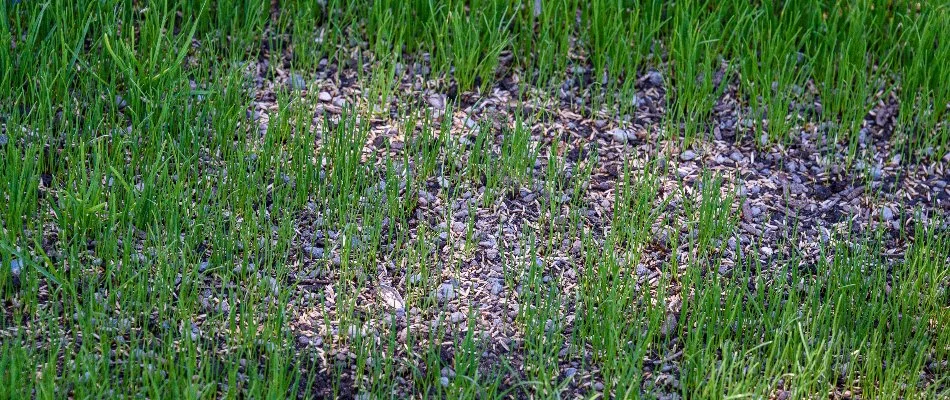
One of the most critical factors for successful grass growth is ensuring good seed-to-soil contact. If the seeds are not in direct contact with the soil, they may struggle to germinate. Seeds need to absorb moisture from the soil to kickstart the germination process. When seeds sit on top of thatch or debris instead of soil, they can dry out quickly and fail to sprout.
To improve seed-to-soil contact, start by preparing your lawn properly before overseeding. This includes mowing the grass short and raking away any debris or thatch. After spreading the seed, gently rake the area to help the seeds settle into the soil. You might also consider using a lawn roller to press the seeds into the soil, ensuring better contact.
Your grass seeds might not have grown after overseeding because of inconsistent watering.
Watering is crucial after overseeding, but achieving the right balance can be tricky. Both underwatering and overwatering can hinder seed growth. Seeds need consistent moisture to germinate, but too much water can suffocate them, while too little can cause them to dry out.
Underwatering is a common issue, especially if you assume that natural rainfall will suffice. Without adequate moisture, seeds can become dormant or die. On the other hand, overwatering can lead to waterlogged soil, depriving seeds of the oxygen they need and increasing the risk of fungal diseases. To avoid these pitfalls, it's best to follow a watering schedule after overseeding. You can start by watering lightly and frequently for the first 2 weeks, keeping the soil consistently moist but not saturated. Gradually reduce the frequency as the grass begins to grow, allowing the roots to establish deeper in the soil.
Poor Soil Conditions or Temperature Can Impact Seed Growth After Overseeding
Soil conditions and temperature also play significant roles in seed germination. Grass seeds won't grow if they're spread during the hot summer months or if it's too late in the fall when soil temperatures dip below 50 degrees Fahrenheit. Seeds require specific temperature ranges to germinate, and extreme conditions can halt their development.
Unhealthy soil can further complicate growth. Compacted or nutrient-deficient soil makes it difficult for seeds to access the resources they need to thrive. Conduct a soil test to determine pH levels and nutrient content, and amend the soil as necessary with fertilizers or organic matter. Aerating the lawn before overseeding can also improve soil health by allowing air, water, and nutrients to penetrate more effectively.
Call our team today to sign up for our overseeding service!
If your lawn looks patchy and lackluster, we can help you revitalize its growth and appearance with our overseeding service! Our team offers 3 overseeding packages, Bronze, Silver, and Gold, which involve using different amounts of grass seed depending on your lawn's size and needs. This service is offered in the fall to ensure conditions are ideal for the seeds to germinate successfully and grow into beautiful, green grass.
To ensure the seeds have optimal seed-to-soil contact, we recommend pairing it with our aeration service! When you schedule both services, we will throw in a soil enhancement treatment to give the seeds a much-needed boost. We offer these services to commercial and residential properties, as well as HOAs, in and around Delaware, Lewis Center, and Powell, OH. Give us a call today at (740) 318-5296 to sign up!



Comments (0)
Thanks for your comment!
Thanks for your feedback! Your comments have been successfully submitted! Please note, all comments require admin approval prior to display.
Error submitting comment!
There is a problem with your comment, please see below and try again.