
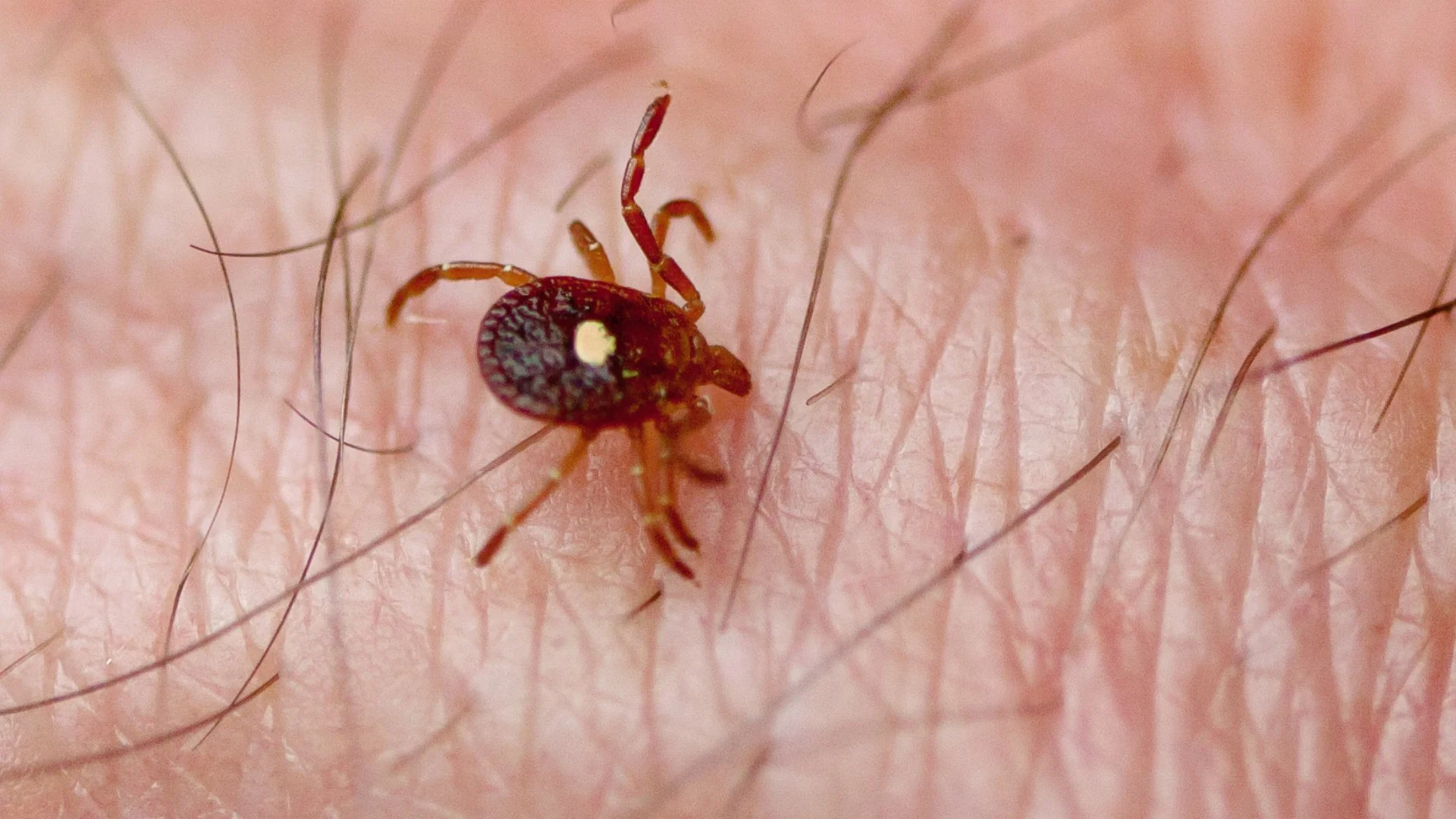
Ohio is home to several tick species, including American dog ticks, blacklegged ticks, and lone star ticks. Each has distinct identifying features, from the white markings of American dog ticks to the two-tone coloring of blacklegged ticks and the signature white dot on lone star ticks. Knowing what to look for can help you identify the ticks on your property so you can take action to protect yourself and your loved ones.
American dog ticks have reddish-brown bodies that reach up to 15mm when engorged.
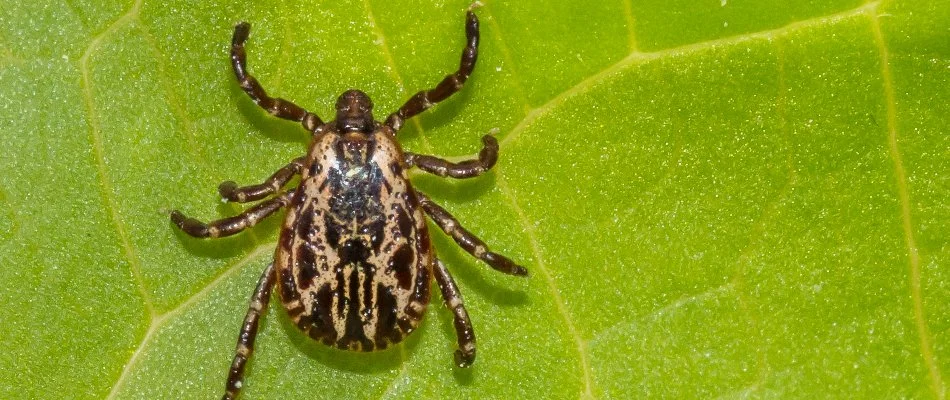
American dog ticks are among the most commonly encountered ticks in North America, recognizable by their reddish-brown bodies that can reach up to 15 mm when engorged. Adult females are particularly easy to identify due to their size and distinctive white or grayish markings on their backs. Males are slightly smaller and share similar coloration, though they do not exhibit the large, engorged appearance of females. These ticks are often found on dogs and other animals, making them a common concern for pet owners.
Typically inhabiting grassy and wooded areas, American dog ticks are frequently encountered along trails and paths used by both animals and humans. Their activity peaks during the warmer months, from spring to early fall, when they are most likely to latch onto hosts. As vectors for diseases such as Rocky Mountain spotted fever and tularemia, identifying and promptly removing these ticks is crucial for preventing health risks. Regular checks after outdoor activities and quick removal are essential steps to ensure safety for both people and pets.
Blacklegged/Deer Ticks Have Two-Tone Bodies
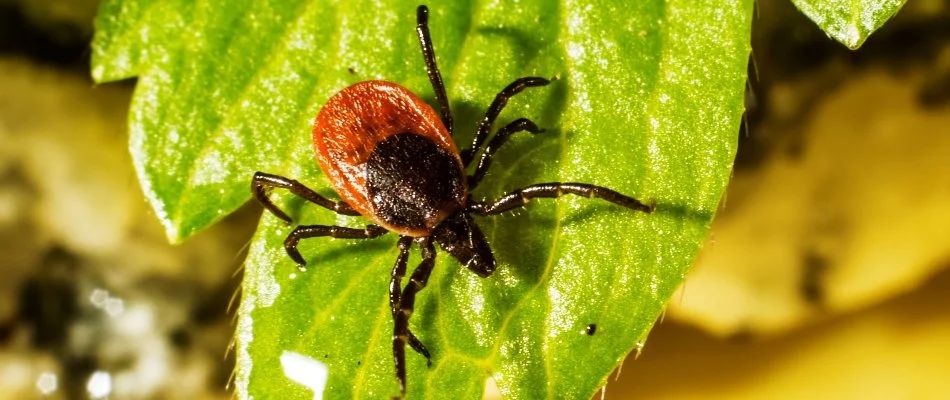
Blacklegged ticks, commonly known as deer ticks, are smaller than American dog ticks, with adult females measuring about 3-5 mm before feeding. They have a distinct two-tone appearance, with a dark brown or black shield and a lighter reddish-brown body. Males are smaller and uniformly dark brown. Nymphs and larvae are even tinier and can be challenging to spot.
These ticks thrive in wooded areas and are often found in leaf litter, tall grass, and shrubs. They are most active from late spring through fall but can be a year-round concern in milder climates. Blacklegged ticks are notorious for transmitting Lyme disease, anaplasmosis, and babesiosis, underscoring the importance of early detection and removal.
Lone star ticks have a distinct dot on their backs.
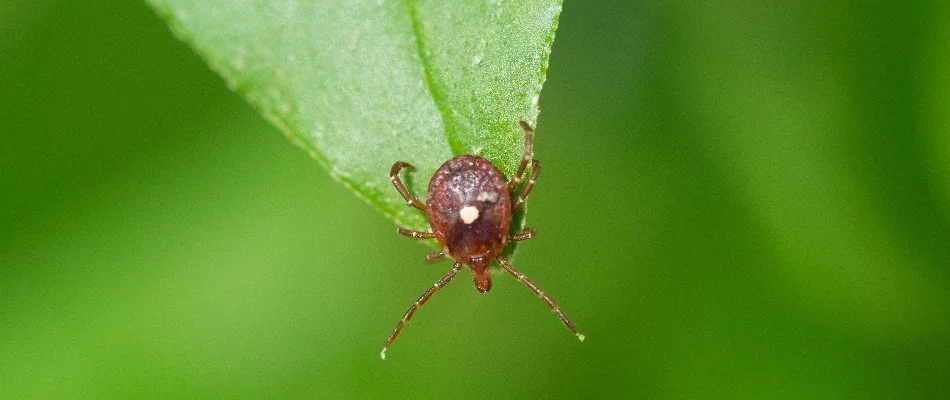
Lone star ticks are easily recognizable, especially the adult females, which feature a distinctive white dot or "lone star" on their reddish-brown backs. Adult males are slightly smaller and have more subtle white markings along the edges of their bodies. These ticks are larger than blacklegged ticks, with adult females measuring about 4-6 mm before feeding.
Lone star ticks are aggressive feeders and are often found in wooded areas, dense underbrush, and grassy fields. They are most active from early spring to late summer. Although they do not transmit Lyme disease, they are vectors for other illnesses such as ehrlichiosis, tularemia, and STARI (Southern Tick-Associated Rash Illness). Their bite can also cause alpha-gal syndrome, a meat allergy in some individuals.
Protect yourself with our tick control service. Call us today to sign up!
Ticks are a common problem for property owners, and knowing what they look like can help you identify them and take the necessary precautions to protect yourself and your loved ones. If you’re looking for a team that can help you keep your yard free of ticks, look no further than our team at Hoffmans Lawn & Fertilization. We offer a flea and tick control service that involves visiting your property five times a year to apply treatments on your property and keep these harmful critters out. This schedule ensures your outdoor space has consistent protection against fleas and ticks!
We offer this service to commercial and residential properties, as well as HOAs, in and around Delaware, Lewis Center, and Powell, OH. Call us today at (740) 318-5296 to sign up for this service!



Comments (0)
Thanks for your comment!
Thanks for your feedback! Your comments have been successfully submitted! Please note, all comments require admin approval prior to display.
Error submitting comment!
There is a problem with your comment, please see below and try again.