
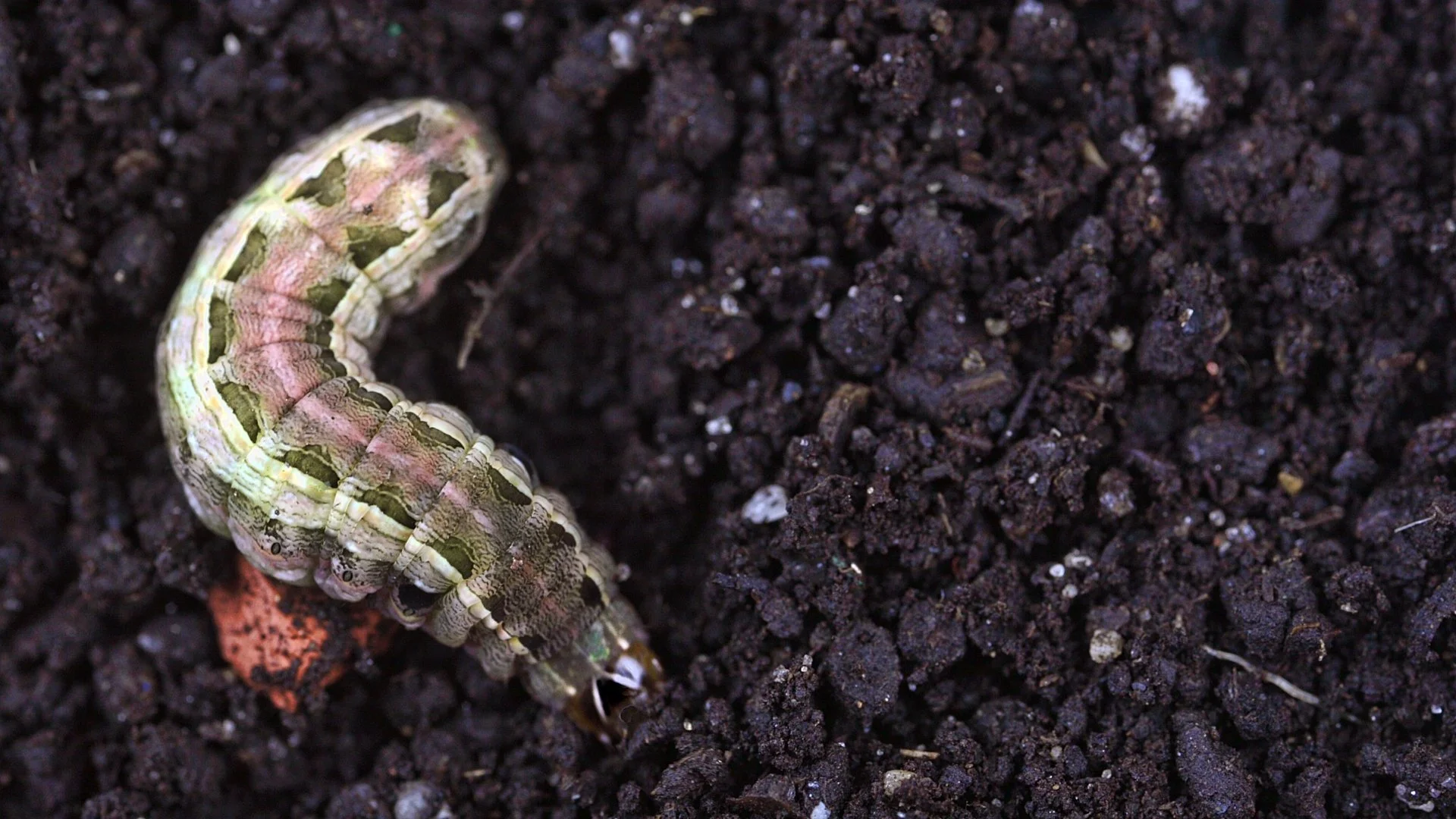
Armyworms, the larval stage caterpillars of moths, are green, brown, or black, with an inverted Y-shape on their heads, measuring up to 1.5 inches. From May to October, especially after rain, they cause significant lawn damage by eating grass down to the base, creating bare patches. This leads to soil erosion and weakens the lawn's structure. Managing infestations requires curative insecticide treatments to stop active feeding, and preventative measures can be administered to create barriers against future infestations. Early detection and intervention are crucial for minimizing long-term damage to your lawn in Ohio.
What do armyworms look like?
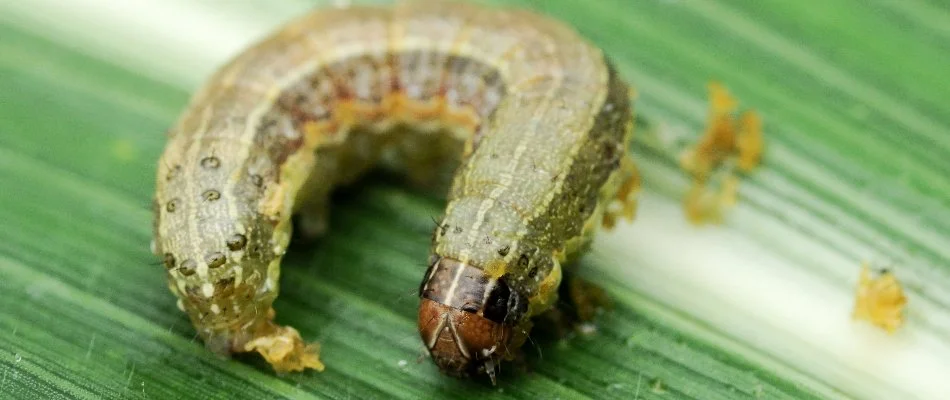
Armyworms are the larval stage of moths. These caterpillars are typically green, brown, or black, measuring up to 1.5 inches in length. A characteristic feature of armyworms is the distinctive inverted Y-shape on their head, which helps distinguish them from other caterpillars. Their bodies have stripes running along the sides, ranging from pale to dark shades.
As they mature, armyworms transform into adult moths, which are small and gray or brown with a wingspan of about 1.5 inches. These moths are nocturnal, laying eggs on grass blades and crop leaves. When conditions are favorable, armyworm populations can grow rapidly, necessitating prompt action to prevent extensive damage.
What kind of damage do armyworms cause?
Armyworms can wreak havoc on lawns, leaving behind noticeable damage. These pests feed on grass blades, often chewing them down to the base. This results in large, irregular patches of dead grass, creating unsightly bare spots across your lawn. As they consume the grass quickly, these patches can appear almost overnight, giving the impression of a rapidly deteriorating lawn.
The presence of armyworms not only affects the appearance of your lawn but also its health. By removing the grass surface, armyworms expose the soil, making it more susceptible to erosion and weeds. This damage can weaken the overall lawn structure, making it difficult for the grass to recover and thrive without intervention. Left untreated, armyworm infestations can lead to significant long-term problems, requiring costly repairs and reseeding.
When are armyworms an issue?
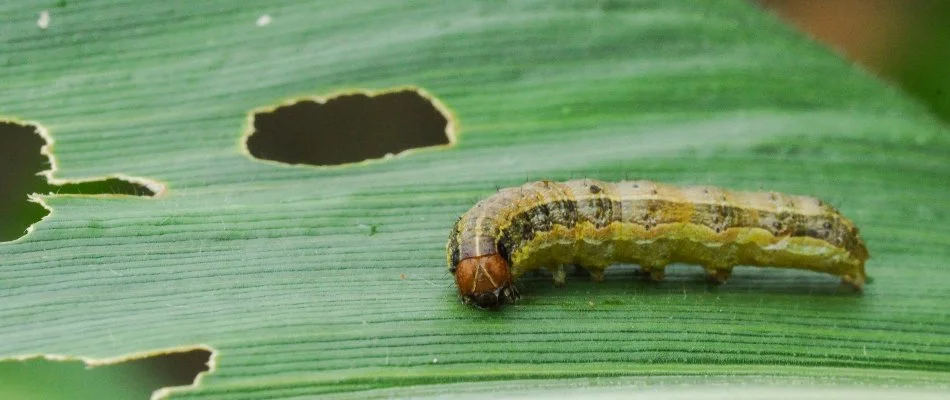
Armyworms are most problematic from May to October, thriving in warm, humid conditions. The peak activity often follows periods of heavy rain or irrigation, which creates an ideal environment for egg hatching and larval growth. During these months, vigilance is essential, as early detection can help minimize potential damage.
Property owners should keep an eye out for signs of armyworm activity, such as chewed grass patches or adult moths. Regular monitoring during this period is crucial to catch infestations early and apply necessary treatments before the problem escalates.
How do you deal with armyworms?
Dealing with armyworms involves both curative and preventative measures. If armyworms have already infested your lawn, curative treatments are necessary to eliminate them. These treatments involve applying insecticides that target the armyworms and stop their feeding activity. This will stop these creepy crawlers in their tracks before they cause further damage to your grass.
Preventative treatments are equally important in managing armyworm infestations. Preventative insecticide treatments can be applied before armyworms become a problem. These treatments create a protective barrier in the soil, preventing armyworms from establishing themselves in your lawn. By taking a proactive approach, you can minimize the risk of armyworm damage to your lawn.
Give us a call today to sign up for our armyworm control service!
Armyworms can cause extensive damage to your lawn in a short period, which is why you'll want to ensure that it is properly protected. Here at Hoffmans Lawn & Fertilization, we offer armyworm control treatments that are offered as part of our insect control program. With this program, your lawn will receive 5 treatments from spring to fall to protect your grass from these pests, along with other critters, like chinch bugs, fleas, ticks, and more.
These treatments are applied not only to your lawn but also to your trees, shrubs, and the foundation of your building to achieve comprehensive protection. Our armyworm control service is offered to property owners in and around Delaware, Lewis Center, and Powell, OH. Call us today at (740) 318-5296 to sign up!


Comments (0)
Thanks for your comment!
Thanks for your feedback! Your comments have been successfully submitted! Please note, all comments require admin approval prior to display.
Error submitting comment!
There is a problem with your comment, please see below and try again.