
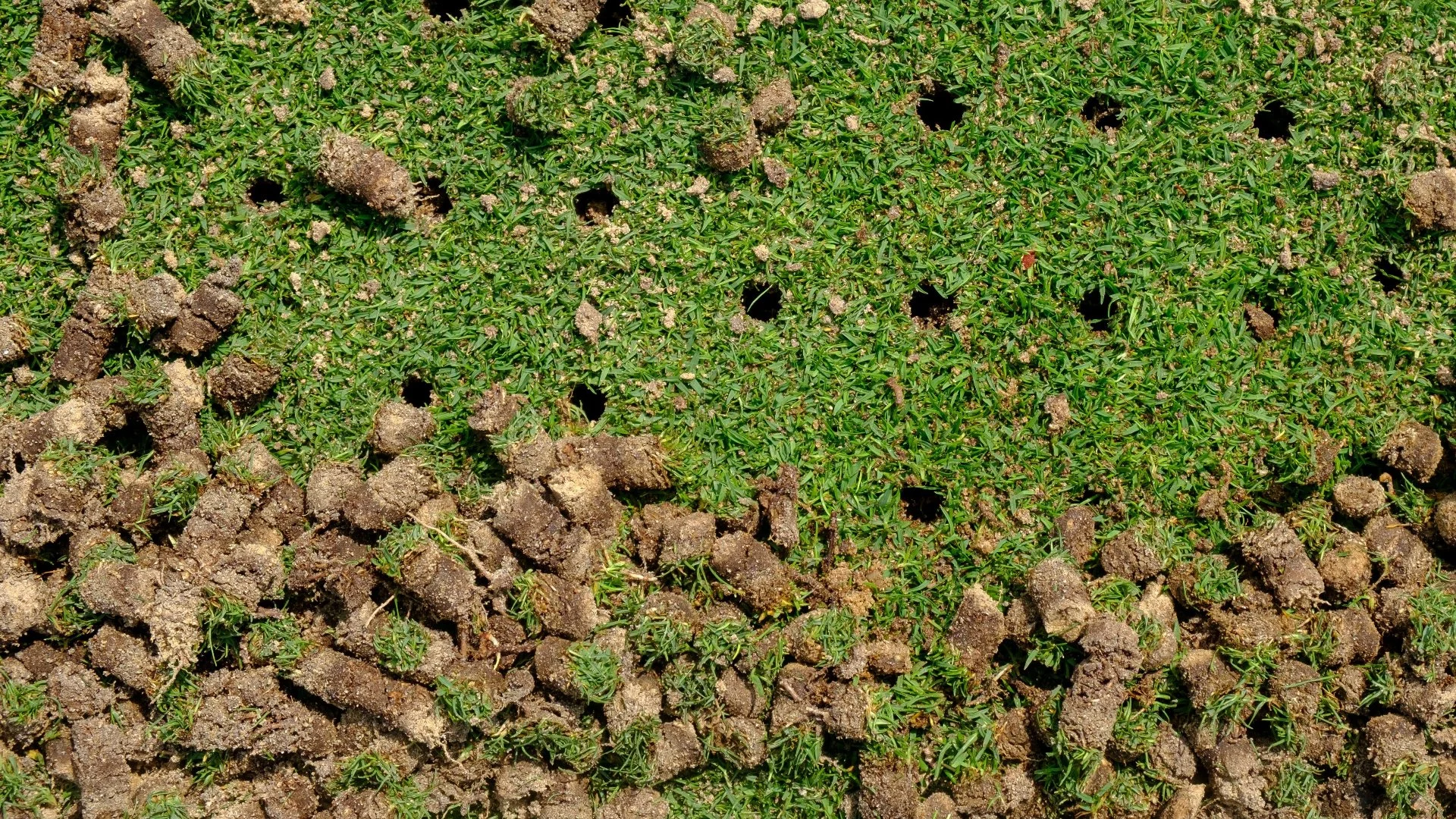
After your lawn has been aerated, you'll notice that it's covered in small soil plugs that were pulled from the ground during the process. Typically, these plugs decompose in 2-4 weeks, but factors like weather, moisture, and soil composition can affect this timeline. If you want to speed up the process, mowing or raking can help by breaking the plugs into smaller pieces. Allowing plugs to decompose naturally is beneficial as they return essential nutrients to the soil and enhance microbial activity. This natural process improves soil structure and supports a thriving lawn in Ohio.
It typically takes 2 to 4 weeks for aeration plugs to break down.
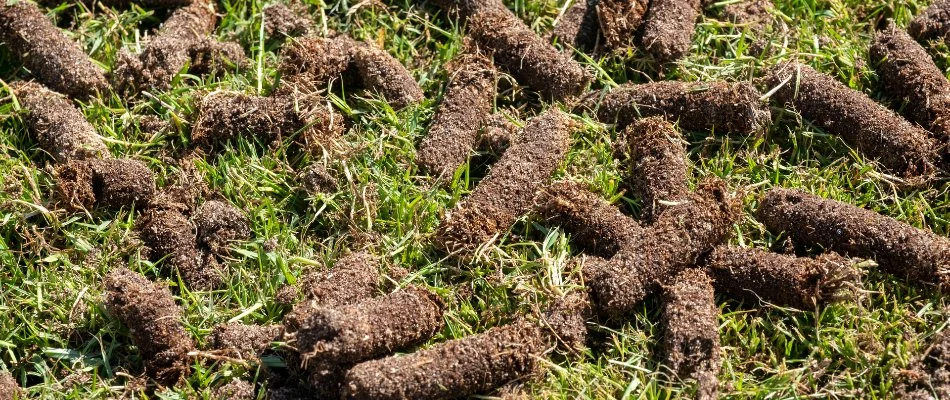
Aeration plugs, also known as cores, are the small cylinders of soil that are removed from your lawn during the aeration process. These plugs typically take around 2 to 4 weeks to break down completely. However, this timeline can vary based on several factors, including weather conditions, moisture levels, and soil composition.
Weather and moisture play significant roles in the decomposition process. In wetter climates or during rainy seasons, plugs are likely to break down more quickly due to increased microbial activity. Conversely, in dry conditions, the process can take longer. Soil composition also affects decomposition; clay-heavy soils might slow down the process, whereas sandy soils might facilitate faster breakdown. Understanding these factors can help you predict and manage the decomposition timeline for your specific lawn.
Ways to Speed Up the Breakdown of Aeration Plugs
If the appearance of aeration plugs on your lawn bothers you, there are ways to speed up their decomposition. One effective method is mowing over the plugs. This action breaks them into smaller pieces, which can be absorbed more quickly into the soil. Additionally, mowing helps distribute the organic material evenly across the lawn, promoting uniform nutrient distribution.
Another option is to rake the plugs. Raking not only breaks them apart but also helps mix them back into the soil. This encourages faster decomposition by increasing contact with soil microbes. Both mowing and raking are practical solutions for those who prefer not to wait for the natural process to take its course. These methods can enhance the aesthetic appeal of your lawn while still reaping the benefits of aeration.
Why is it important to let the aeration plugs break down naturally rather than removing them?
Allowing aeration plugs to break down naturally is beneficial for several reasons. First, they return essential nutrients to your lawn. As the plugs decompose, they release nutrients like nitrogen, phosphorus, and potassium back into the soil, enriching it and promoting healthier grass growth. This natural fertilization process can provide an added boost to your lawn!
Moreover, leaving the plugs to decompose enhances soil structure and promotes microbial activity. The organic matter from the plugs improves soil aeration and water retention, creating a better environment for roots. It also encourages the growth of beneficial microbes that aid in breaking down organic material and maintaining soil health. By letting nature take its course, you support a thriving ecosystem in your lawn, leading to long-term benefits.
Give us a call today to sign up for our core aeration service!
Here at Hoffmans Lawn & Fertilization, we offer a professional core aeration service that involves going across your lawn once with our aerator machine to remove plugs of soil and loosen compaction. These soil cores will be left on your lawn to decompose and provide added benefits to your grass! You can schedule aeration for your lawn in the fall, between September and mid-November.
We offer aeration to homes and businesses, as well as HOAs, in Delaware, Lewis Center, Powell, OH, and surrounding communities. Call us at (740) 318-5296 to sign up for this service.



Comments (0)
Thanks for your comment!
Thanks for your feedback! Your comments have been successfully submitted! Please note, all comments require admin approval prior to display.
Error submitting comment!
There is a problem with your comment, please see below and try again.