

Pruning is essential for healthy plant growth, but it's important not to remove more than one-third of the plant in a year to avoid stress. It's also important to understand the different types of cuts, like heading, thinning, and reduction, and choose the right one to maintain the plant's structure and health. Timing is also crucial, as different plants have specific pruning seasons to ensure optimal growth and flowering. By following these guidelines, you can keep your landscape in Ohio vibrant and resilient.
Don't remove more than 1/3 of the plant in a year.
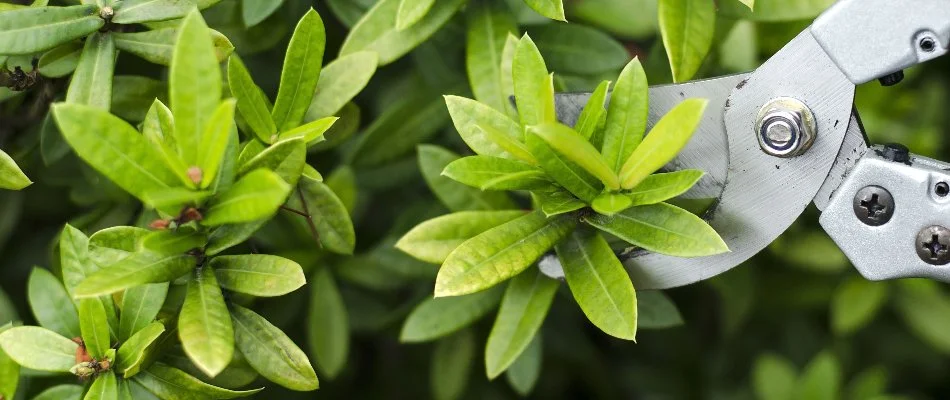
One of the cardinal rules of pruning is to avoid removing more than one-third of a plant in a single year. This guideline helps maintain the plant's health and vigor. Over-pruning can stress the plant, making it susceptible to diseases and pests. By limiting the amount you cut back, you allow the plant to recover and regenerate, ensuring sustained growth.
When pruning, focus on removing dead, diseased, or damaged branches first. This not only improves the plant's appearance but also directs energy towards healthy growth. If you need to shape the plant or control its size, do so gradually over several seasons rather than all at once. This approach minimizes shock and promotes a robust, resilient plant.
Know the type of pruning cuts you plan to make and where to make them.
Understanding the different types of pruning cuts is essential for effective plant care. The three main types of cuts are heading, thinning, and reduction. Each serves a specific purpose and should be applied appropriately.
- Heading Cuts: These involve cutting back the end of a branch to a bud, which encourages bushier growth. Use heading cuts to shape the plant and promote denser foliage. However, be cautious not to overdo it, as excessive heading can lead to a crowded and unmanageable plant structure.
- Thinning Cuts: Thinning involves removing entire branches or stems back to their point of origin. This type of cut opens up the plant's canopy, improving air circulation and light penetration. Thinning is ideal for reducing density without altering the plant's natural shape.
- Reduction Cuts: These cuts shorten a branch by cutting back to a lateral branch that is at least one-third the diameter of the branch being removed. Reduction cuts are useful for controlling the size of the plant while maintaining its form.
Know when to prune depending on your specific plant.
Timing is critical when it comes to pruning, as different plants have specific times of the year when they can tolerate it without adverse effects. Pruning at the wrong time can disrupt growth cycles and lead to poor flowering or fruiting. For deciduous trees and shrubs, the best time to prune is during their dormant season, typically late winter to early spring, before new growth begins. This timing allows for easy visibility of the plant's structure and minimizes stress.
Evergreens can tolerate light pruning at any time, but more extensive pruning is best done in late winter or early spring, just before new growth starts. For flowering plants, timing depends on when they bloom. Spring-flowering plants should be pruned after they finish blooming, while summer-flowering plants can be pruned in late winter or early spring. Fruit trees are usually pruned in late winter to promote healthy fruit production in the coming season. Understanding the optimal pruning times for your plants enhances their health and productivity.
Call our team today to sign up for our pruning service!
Pruning is a vital aspect of plant care that requires careful consideration and technique. Our team at Hoffmans Lawn & Fertilization offers a professional trimming and pruning service designed to keep your plants looking great and in tip-top health. When pruning your plants, our experts will only do so when the timing and conditions are right. Our team proudly serves commercial and residential properties, as well as HOAs, in Delaware, Lewis Center, Powell, OH, and neighboring communities. Call us today at (740) 318-5296 to sign up for this service!



Comments (0)
Thanks for your comment!
Thanks for your feedback! Your comments have been successfully submitted! Please note, all comments require admin approval prior to display.
Error submitting comment!
There is a problem with your comment, please see below and try again.